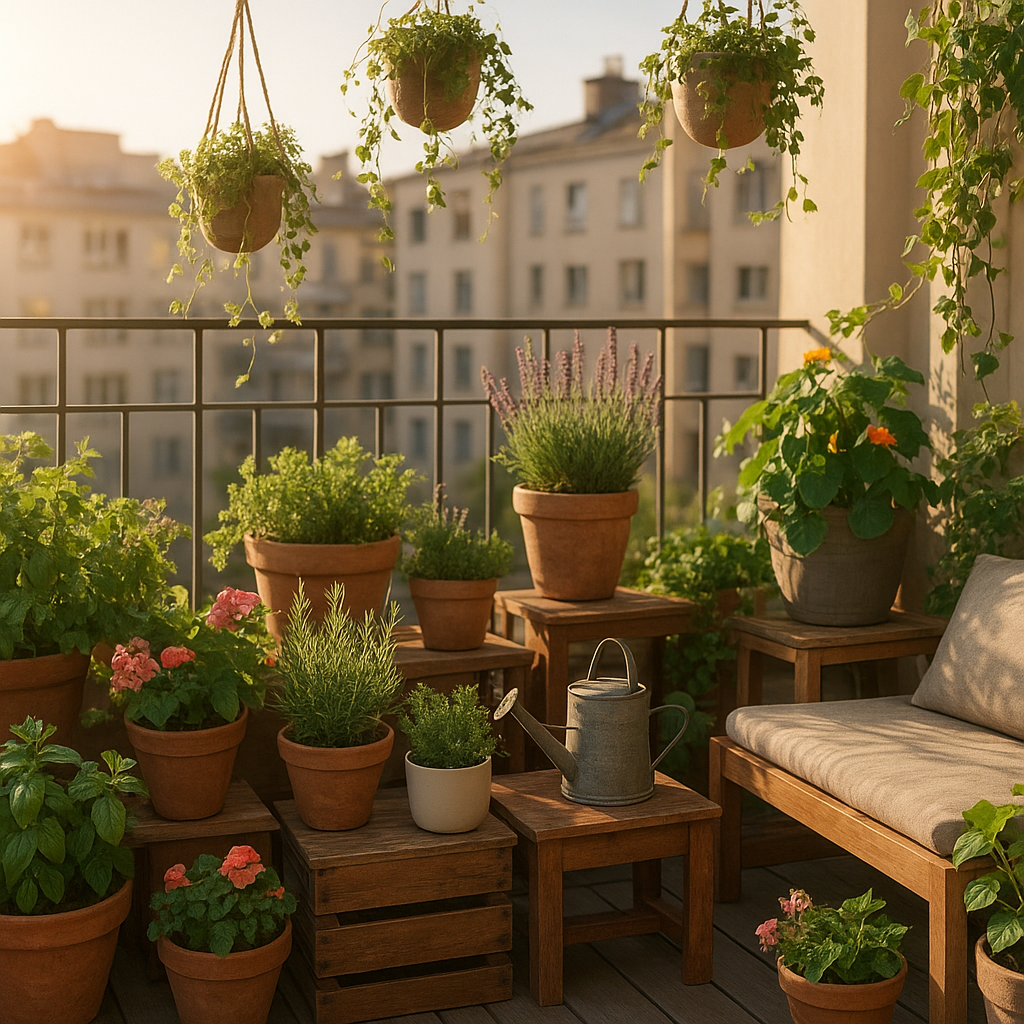
If you’ve ever looked at your balcony, windowsill, or tiny back patio and thought “there’s no room to garden here,” container gardening is about to change your mind entirely. It’s one of those ideas that sounds almost too simple — grow plants in pots — but the reality is far more transformative than that. People across the UK are turning cramped flats, rooftop terraces, and concrete backyards into lush, productive green spaces using nothing more than a few containers, some good compost, and a bit of patience.
Whether you’re after fresh herbs for cooking, a splash of seasonal colour, or even homegrown tomatoes and salad leaves, container gardening makes it genuinely achievable — no allotment required. But beyond the practical appeal, there’s something quietly satisfying about nurturing a plant in a space you’ve designed yourself. It’s part hobby, part home improvement, and honestly, part therapy.
This guide covers everything you need to know: the real advantages, the honest downsides, the techniques that actually work, and why urban gardeners in particular are embracing this approach like never before.
What Are the Advantages of Container Gardening?
Let’s start with the obvious question — and it’s one that comes up constantly for good reason. Container gardening offers a genuinely impressive list of benefits, especially for people living in urban or suburban environments where outdoor space is limited or the soil quality is poor.
You’re in Complete Control of the Growing Environment
This is arguably the biggest advantage. When you plant directly into the ground, you inherit whatever soil conditions exist — compacted clay, poor drainage, contaminated earth, or the wrong pH for your plants. With containers, you fill them with exactly the right compost mix for whatever you’re growing. Acid-loving blueberries thrive in ericaceous compost that you’d never find in a typical UK garden bed. Herbs that need sharp drainage get it automatically when you use a gritty, free-draining mix.
You also control where the plants sit. Too much sun? Move the pot. Late frost forecast? Bring it inside. Fungal disease spreading from one plant? Isolate it immediately. That level of flexibility simply doesn’t exist with in-ground planting.
Accessibility and Convenience
Raised containers and large planters at waist height are a genuine game-changer for anyone with mobility issues, back problems, or who simply doesn’t want to spend hours kneeling on the ground. According to the RHS (Royal Horticultural Society), accessible gardening is one of the fastest-growing trends in the UK, with more people specifically choosing containers to make gardening manageable as they age.
There’s also the sheer convenience of having herbs right outside your kitchen door — or even inside on a sunny windowsill. Snipping fresh basil, mint, or chives seconds before serving a meal is one of those small pleasures that genuinely improves daily life.
Pest and Disease Management
Slugs, vine weevils, and soil-borne diseases are significantly easier to manage in containers. You can add copper tape around pot rims, use nematodes in individual pots, and inspect plants closely because everything is at a manageable scale. If one container develops a problem, it doesn’t automatically spread through an entire garden bed.
Extending the Growing Season
Moving containers under cover, into a greenhouse, or even indoors during colder months means you can start growing earlier in spring and keep plants going well into autumn and winter. Many urban gardeners in the UK grow salad leaves and herbs year-round using this method, which would be nearly impossible with traditional outdoor beds.
What Are the Downsides of Container Gardening?
In the spirit of being genuinely useful rather than simply enthusiastic, it’s worth being honest about the challenges. Container gardening isn’t without its limitations, and understanding them upfront saves a lot of frustration.
- Watering demands: Containers dry out far more quickly than garden beds, especially during warm weather. In summer, some pots may need watering once or even twice daily. Self-watering containers and water-retaining granules in compost can help, but it’s still a commitment.
- Nutrient depletion: The limited volume of compost in a container gets exhausted relatively quickly. Regular feeding with a balanced liquid fertiliser is essential — without it, plants will struggle noticeably within a few weeks of their initial compost running low.
- Root restriction: Larger plants — fruiting trees, big shrubs, climbing roses — simply don’t reach their full potential in containers. They can be grown, but they’ll always be smaller than their in-ground counterparts.
- Weight: A large container filled with damp compost can be extraordinarily heavy. This matters particularly for balconies and rooftops, which have structural weight limits. Always check before loading up a terrace with large pots.
- Cost: Quality containers, specialist compost mixes, and feeding regimes add up. The initial investment can be higher than simply buying a packet of seeds and digging a patch of earth.
None of these downsides make container gardening impractical — they’re just things to plan for rather than be surprised by later.
What Is the 70/30 Rule in Gardening?
The 70/30 rule is a useful guideline that applies particularly well to container gardening and mixed planting arrangements. The principle is that roughly 70% of your planting should consist of consistent, structural, or foundational plants — things that provide year-round form, foliage, or reliable performance — while 30% can be seasonal, experimental, or changeable plantings that add interest and variety throughout the year.
In practical terms for container gardening, this might mean that 70% of your containers are filled with reliable performers: evergreen herbs like rosemary and thyme, structural foliage plants, or proven seasonal staples like lavender or ornamental grasses. The remaining 30% are your experiment pots — trying a new variety of tomato, testing whether chillies work on your particular balcony, or switching out annuals with the seasons.
The rule prevents the common mistake of filling every pot with high-maintenance, short-lived plants and then feeling overwhelmed when they all need replacing at once. It gives your container garden a consistent backbone while still leaving room for creativity and change.
The Benefits of Urban Gardening More Broadly
Container gardening sits at the heart of the urban gardening movement, and the benefits of that movement extend well beyond simply having somewhere to grow tomatoes.
Mental Health and Wellbeing
Research consistently links gardening — even small-scale, container-based gardening — with reduced stress and improved mood. A 2022 study published in the International Journal of Environmental Research and Public Health found that urban gardening activities significantly reduced cortisol levels and self-reported anxiety in participants. For people living in cities, where green space is often limited and daily life is fast-paced, tending to even a small collection of containers provides a meaningful moment of calm. It’s the kind of activity that fits naturally into a broader approach to personal well-being, helping to ground and restore you amid the demands of urban life.
Food Security and Cost Savings
Growing your own herbs, salad leaves, and vegetables — even in modest quantities — has real financial benefits. Fresh herbs from supermarkets are expensive relative to what you get, and growing them in a small pot on a windowsill costs a fraction of the price over a season. With the cost of living remaining a concern for many UK households, even small contributions from home-grown produce matter.
Environmental Impact
Urban container gardens contribute to biodiversity by providing nectar sources for bees and other pollinators in environments that are otherwise largely inhospitable to wildlife. Choosing peat-free composts — now much more widely available in the UK — further reduces the environmental footprint of container gardening.
Getting Started: Practical Tips for Beginners
Choosing the Right Containers
Don’t overthink this. Almost anything that holds compost and has drainage holes can work as a container. Terracotta pots are classic for good reason — they’re breathable and help regulate moisture — but they’re heavy and can crack in frost. Lightweight plastic containers are practical for balconies. Fabric grow bags are surprisingly effective for potatoes, tomatoes, and root vegetables. Old wooden crates, recycled buckets, and galvanised metal troughs all work beautifully and add character.
The golden rule: drainage is non-negotiable. Waterlogged compost kills plants. Drill holes if needed, and never leave pots sitting in saucers full of water for extended periods.

Compost Matters More Than You Think
General-purpose peat-free compost is a solid starting point for most plants. For herbs that need good drainage, mix in some horticultural grit. For moisture-loving plants like ferns, add perlite or water-retaining granules. Tomatoes and heavy feeders benefit from a rich, loam-based compost like John Innes No. 3.
Refresh or replace container compost annually — old, exhausted compost becomes compacted and nutrient-poor, and no amount of feeding fully compensates for it.
The Best Plants for Urban Container Gardening
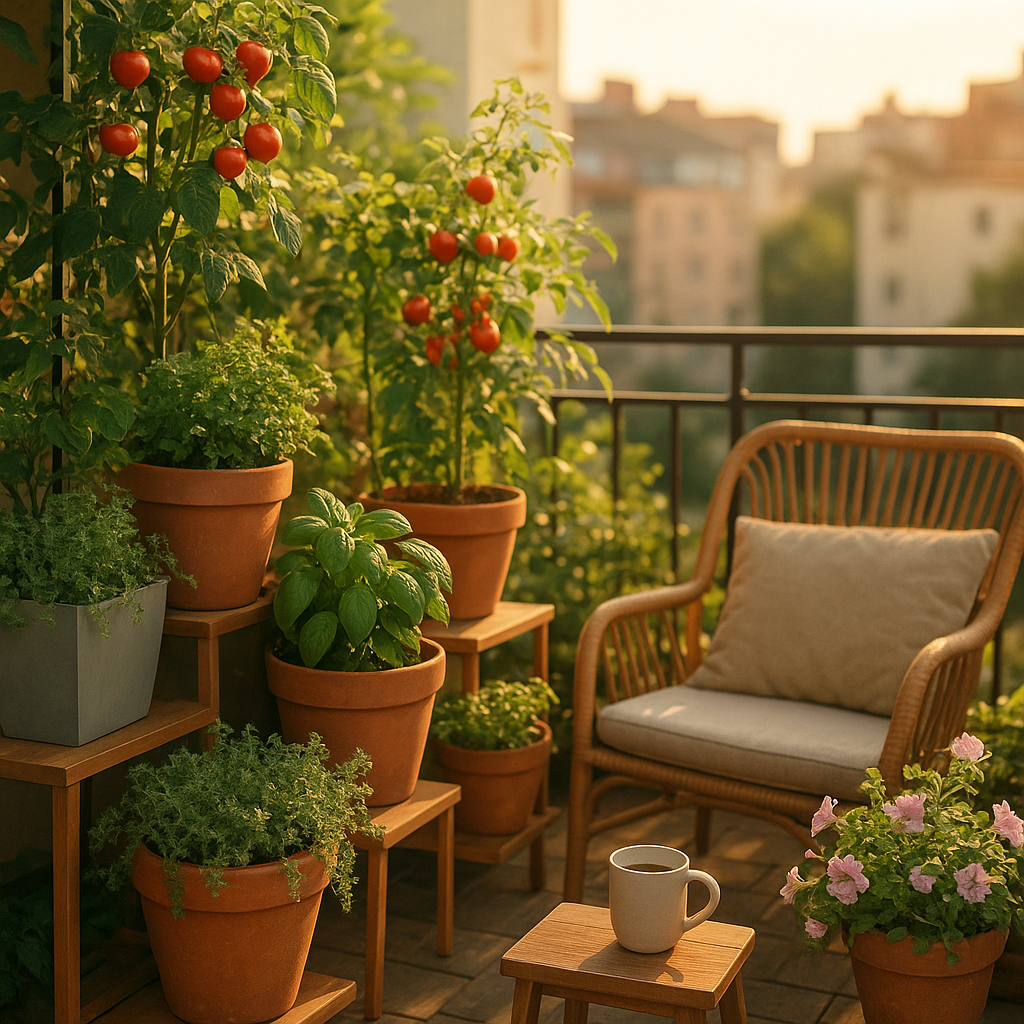
- Herbs: Basil, mint (always in its own pot — it’s invasive), rosemary, thyme, chives, coriander, and parsley are all excellent container plants.
- Salad leaves: Cut-and-come-again lettuce, rocket, and spinach grow quickly in shallow containers and can be harvested repeatedly.
- Tomatoes: Compact or tumbling varieties like ‘Tumbling Tom’ or ‘Tiny Tim’ are specifically bred for container growing.
- Flowering plants: Pelargoniums, petunias, calibrachoa, and lavender provide long-lasting colour with relatively little fuss.
- Structural evergreens: Box (or its alternatives following box blight concerns), pittosporum, and dwarf conifers give year-round form and permanence to a container display.
Feeding and Maintenance
Once plants have been in containers for six to eight weeks, the nutrients in the compost begin to deplete. From that point, a regular feeding routine makes an enormous difference. A balanced liquid feed (or tomato feed, which is high in potassium, for flowering and fruiting plants) applied weekly during the growing season keeps plants healthy and productive. It takes about two minutes and the results are dramatic compared with unfed plants.
Making Container Gardening Work in Small Urban Spaces
Space constraints are an invitation to be creative rather than a reason to give up. Vertical growing — using wall-mounted planters, tiered shelving, or trellises with climbing plants in containers — multiplies the usable growing area on even the smallest balcony or patio. A simple metal shelving unit from a hardware shop can hold a dozen pots in the footprint of a single large planter.
Grouping containers together also helps. Plants placed in clusters retain moisture better (they shade each other’s root zones), create a more visually impactful display, and are easier to water efficiently. It also creates that sense of a proper garden rather than a few lonely pots scattered around a patio.
Thinking in layers — tall structural plants at the back or centre, medium-sized plants in the middle, and trailing plants at the edges — applies just as much to container arrangements as it does to traditional borders, and it makes even a small collection of pots look intentional and designed rather than haphazard.
In Summary
Container gardening is one of the most practical, flexible, and genuinely rewarding ways to bring greenery, food, and life into an urban home. The advantages — control over growing conditions, mobility, accessibility, and the ability to garden virtually anywhere — make it an ideal approach for city dwellers, flat owners, and anyone working with limited outdoor space.
The challenges are real but manageable: consistent watering, regular feeding, and choosing the right plants for your containers and conditions will take care of most problems before they start. Understanding principles like the 70/30 rule helps build a container garden with staying power rather than one that looks great in May and exhausted by July.
Beyond the practicalities, the broader benefits of urban gardening — the mental health boost, the connection to nature, the modest but meaningful contribution to local biodiversity — are reason enough to give it a go. Start small, learn what works in your particular space and microclimate, and expand from there. A single pot of herbs on a kitchen windowsill is a perfectly legitimate beginning.